NATURE’ S REVENGE
So there!!! We’ve had enough! Ain’t gonna take it anymore!
One thing about you humans…wherever you go, you make a lot of trash! Secured in a trash can? No problem! But litter dropped everywhere creates constantly dangerous surroundings, and a tempting, irresistible buffet! We’ve lost too many friends with your littering. It’s time for payback! Sincerely, Your Local Wildlife
Did you ever consider that animals are sharing THEIR neighborhood with us? They were here first. When we moved in, some reacted by moving away altogether. Some have adapted to our ways…even our ways of littering.
One of the most alarming aspects of litter is its harmful effects on wildlife. Litter kills wildlife! Animals are innocent victims affected by our thoughtless litter every day. Researchers estimate over one million animals die each year after eating, or becoming trapped in, improperly discarded trash. Everyday trash, like fast food wrappers, beverage bottles, beer cans, grocery bags, and cigarette butts destroys wildlife, their habits, and their habitats.
The harmful effects of littering are many:
- Starvation – It’s very hard to find food or eat with a bag, bottle, cup, or can on your head! Eating food wrappers can also make wildlife sick by damaging or blocking their digestive system.
- Poisoning – Animals often mistake litter for actual food. Spoiled food, and cigarette butts which contain nicotine can be toxic. Litter can also contaminate soil and water, disrupting ecosystems and harming wildlife indirectly. Animals can die by drinking contaminated water.
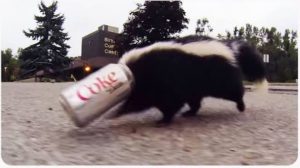
- Physical Harm and Trapping – Non-biodegradable trash, like 6-pack rings, can trap and deform animals. They can become tangled or wounded trying to get free. Cans and broken glass often cut wildlife and lead to infection. Gum gets matted in feathers and fur. String, elastic bands, netting, and monofilament fishing line hinder the ability to move, find food, and escape from predators. It also causes drowning, suffocation, and strangulation!
- Behavioral Changes – Roadside litter can cause wildlife to be hit by cars. Attraction
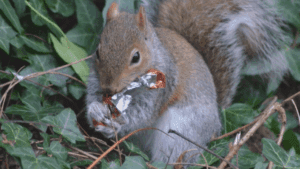 to food scraps desensitizes animals to human presence, and makes them targets for extermination. Changes to habitat reduces available food and shelter. This may cause animals to move into areas where it’s easier for predators to catch and eat them.
Are animals able to take actual revenge? Not really, but litter does cost all of us. Ignorance and laziness are the top reasons why people litter. Instead of making it worse…WE can do something about it!
- Do not litter! We see these words everywhere, and yet candy wrappers, food & beverage containers, and plastic bags remain ever-present in places where people go – as if a badge saying “I’ve been here.” Have you ever tried walking around with plastic wrapped around your legs or a food container stuck on your feet or a plastic bag over your head?
- Properly dispose of trash. Always use a trash can. Tie bags securely and make sure they FIT in the can.
- Don’t underestimate the small things. Organic items like paper or food take weeks or months to decompose, but aluminum cans can take 80-200 years, a plastic bottle, 450 years, and a glass jar, a million years or more! It’s easy to cut elastic bands and jar or 6-pack rings.
- Reuse or recycle if possible. Chose reuseable bottles, cups, and shopping bags. Littering wasn’t much of an issue until the 1950’s, after World War II when there was a huge increase in the production of disposable goods. Before this, plastic waste was virtually unheard of! Now, after decomposition, plastics become microplastics, which never disappear, and have been found nearly everywhere in the human body.
- Educate others and set an example. Don’t keep what you’ve learned a secret! Maybe participate in a community cleanup event. Encourage others by picking up litter you see and lead by example.

We are all part of the same community, interconnected in many ways we don’t observe directly. In our shared landscapes, we must not behave like rude, unwelcome visitors, and always be respectful of both wildlife, and people. We are all part of nature!
RIPARIAN COORIDOR
What is a Riparian Zone?
It may sound like something out of science fiction, but, chances are, you see Riparian Zones nearly every day!
Riparian Zones are unique areas along the edges of streams, lakes, or other bodies of water that are shaped by the ebb and flow of water.
What makes them so special?
Despite making up less than 2% of land area in the Southwest United States, Riparian Zones are integral to keeping our waterways safe and healthy. Riparian Zones are powerhouses of biological diversity, that provide habitat for many different species of plant, animal, and bacteria. The plants that live in the Riparian Zone combat soil erosion and help maintain water quality by removing excess sediment or nutrients, helping keep our water safe and clean.
In addition, all sorts of animal interact with Riparian Zones every day:
- Birds nest in the overhead trees
- Deer, skunk, and raccoons forage for food on the ground
- Fish relax in under the plant’s shade
- Even humans fish and picnic by the Zone’s beautiful scenery
Threats to the Riparian Zone
Urban Sprawl – The development and expansion of urban zones often leads to removal of the Zone’s vital vegetation and can change the structure of the water bank. Without the proper vegetation, flooding can occur more easily, and harmful sediments can spread throughout the area.
Invasive Plants – The presence of invasive plants puts harmful stress on Riparian Zones as native plants need to compete for necessary resources and space.